
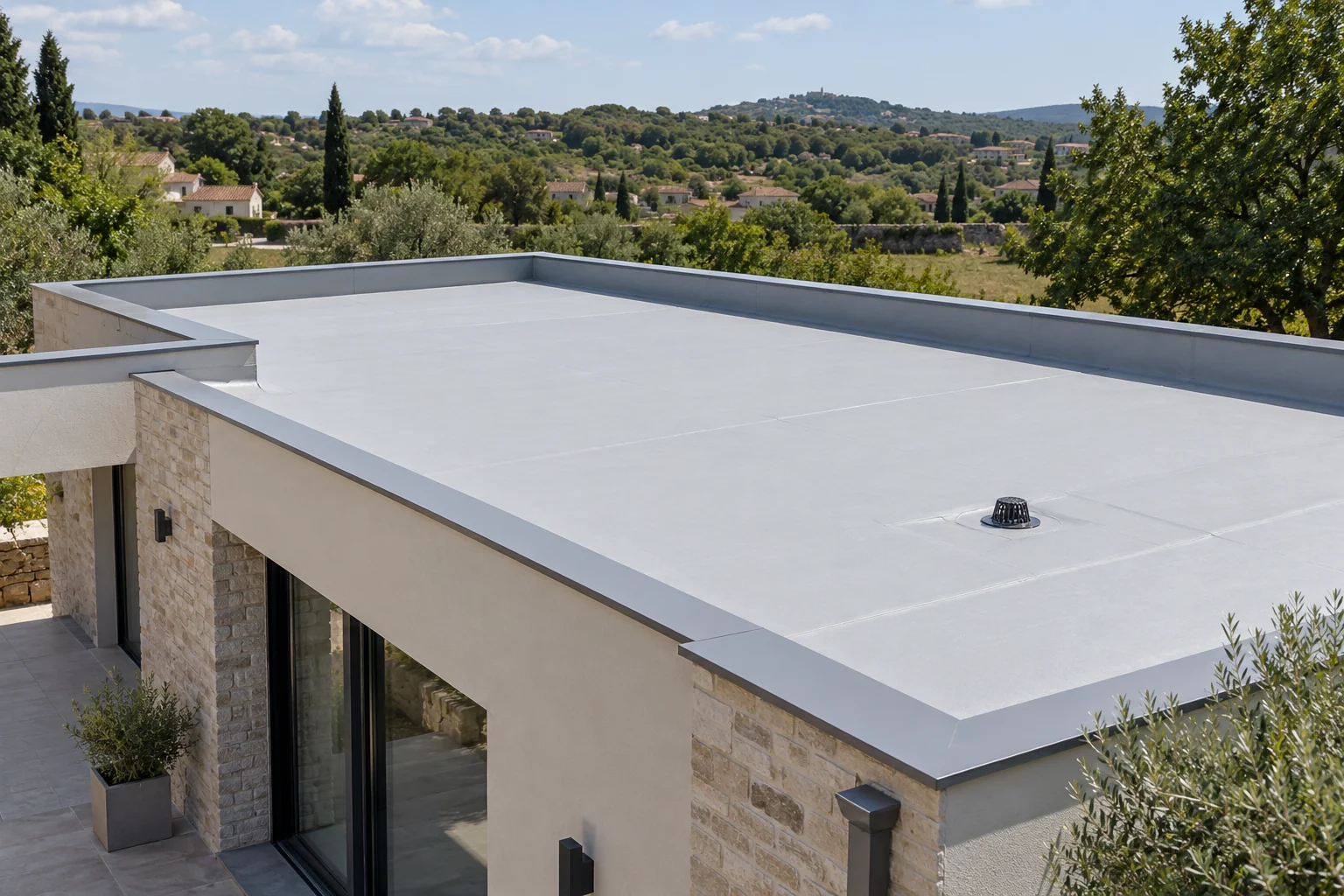
Picture a freshly decorated sitting room. The furniture is back in place, then a heavy shower leaves a damp patch on the ceiling. The flat roof above has only recently received new waterproofing. Surely the membrane has failed?
Do not commit to replacing the membrane from that stain alone. Have the drain, parapet connections and pipe penetrations checked as well. The stain shows where water emerges below; its entry point can be elsewhere.
Before choosing a product, establish the condition of your roof and where its water should go. That gives you a repair plan for the cause, rather than another layer over the same problem.
“Flat” still needs a fall
A new membrane laid over a hollow can leave you with a beautifully finished puddle. The covering has changed; the shape of the roof has not.
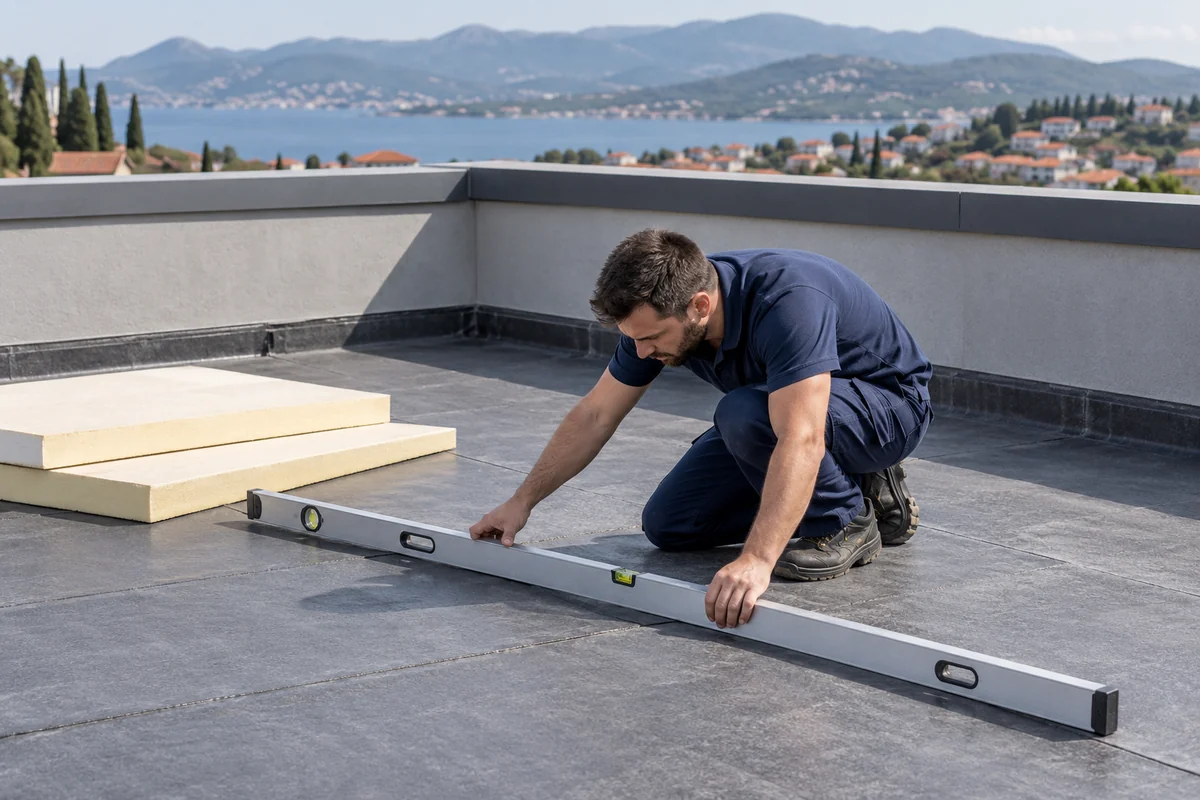
Have the levels measured rather than judging the surface from the terrace door. Water needs a clear route to an outlet, including around upstands and equipment bases. Resolve small dips before they disappear beneath your finished roof.
Falls can be formed in a suitable screed or with tapered insulation. The decision needs the whole roof build-up: structural capacity, available height, door thresholds and perimeter details. Adding screed by guesswork adds weight as well as height.
An outlet is only useful if water reaches it
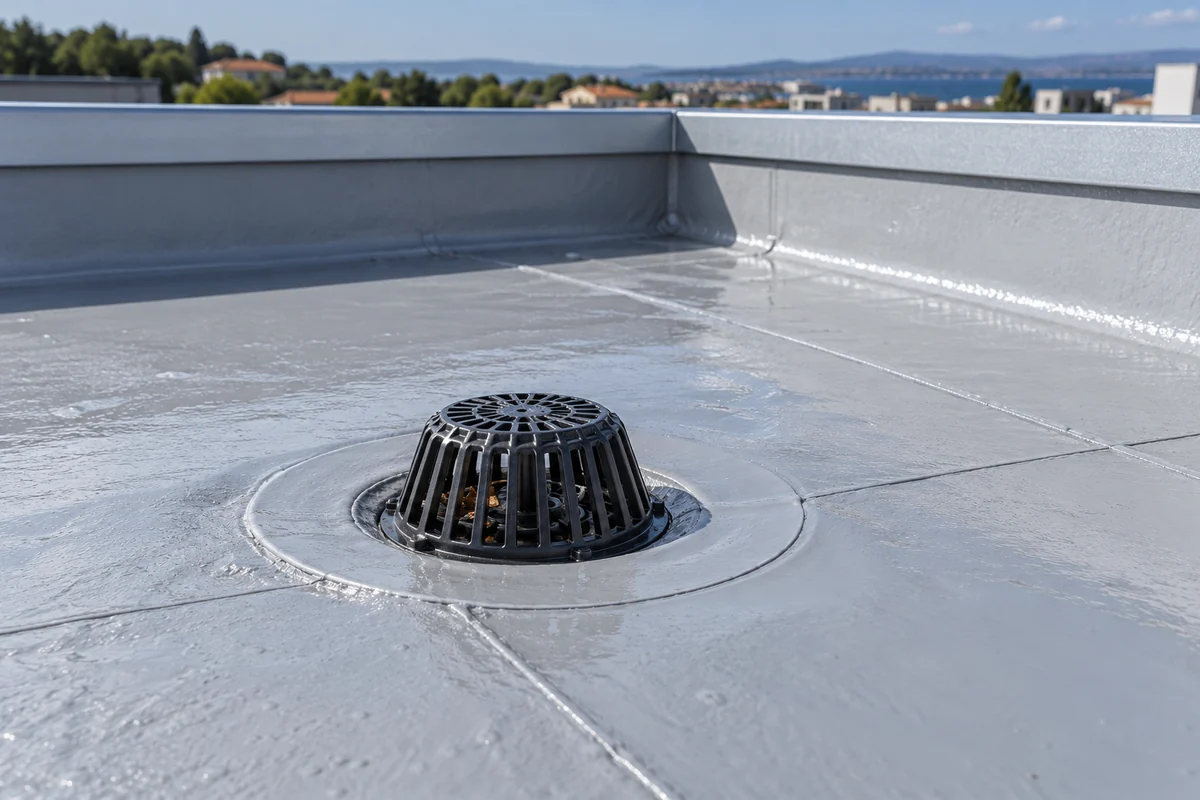
An outlet standing proud of the surrounding membrane will not empty the low spot beside it. Have its actual level, connection to the membrane and pipework below checked.
Drainage capacity needs to suit the roof area and the rainfall loading used for the design. “One should do” is not a drainage calculation.
On a roof enclosed by parapets, ask what happens if the main outlet blocks. Emergency drainage or an overflow must have a considered position and capacity. Your terrace door must not become the escape route.
SitaEasy illustrates purpose-made main and emergency outlets with a choice of connection sleeve. Selection depends on the drainage design and membrane.
Access matters too. An outlet hidden beneath fixed decking is awkward to clean exactly when you need it most.
The awkward details deserve the close-up photographs
Long, neat membrane runs look reassuring. Include the parapet termination, ventilation pipe and outlet flange in the inspection as well: these details belong in your repair scope.
The waterproofing needs proper upstands, terminations and compatible penetration details. A generous bead of sealant cannot replace them. Sealant has specific uses; it is not a complete roof repair strategy.
Tell the contractor about air-conditioning supports, aerials and future solar panels before work starts. A fixing added afterwards can puncture an otherwise sound roof.

Choose a roofing system, not just a membrane
Bitumen, PVC or TPO? Before choosing, have the existing layers assessed and explain how you will use the roof. A familiar product name alone cannot settle the specification for your house.
Each system has its own requirements for substrates, laps, fixings and separation from other materials. A PVC-compatible outlet is not automatically suitable for welding to a TPO membrane. Ask for the specific products to be checked together.
Wind restraint also belongs in that conversation. Membrane thickness alone tells you very little about whether the complete roof has been properly specified.
Ask for the quotation to describe the system and its details, rather than simply name a roll of material.
Do not trap the old problem underneath
When refurbishing a house, a dry-looking roof surface can hide wet insulation below. Depending on its condition, arrange appropriate openings or moisture checks before agreeing which layers you can retain.
Rainwater ingress and condensation within the roof are different problems. The waterproof covering keeps external water out. A vapour control layer manages moisture passing through the build-up from inside, and its position needs to suit that build-up.
Sarnavap-500 E illustrates a separate vapour barrier for specified PVC roofing systems. Its position should not be copied into every roof build-up.
Covering everything with another layer may be convenient. It does not establish that the layers underneath are sound.

A roof terrace is a design decision
If you want a table, chairs or regular access, say so at the start. The finish, protection of the waterproofing and loads need to be planned together.
Heavy planters deserve particular attention. So do door heights and access to the outlets. “We will add some paving later” leaves too much unresolved.
A maintenance-only roof and a terrace used every day need different arrangements.
Ask what the repair price actually includes
A useful quotation describes inspection, substrate preparation, removal or retention of old layers, falls, waterproofing, outlets and perimeter details.
Agree how workmanship will be checked before the important joints are covered. The method must suit the roof and its structure; do not improvise a flood test by blocking the outlets yourself.
Keep photographs of the concealed details. They will be more useful later than a single photograph of the finished surface.
Leave room for maintenance
With safe access, have leaves, outlets and visible edges checked before wet weather and after severe storms. Keep access available so routine maintenance does not require dismantling your finished surface.
If the same patches keep holding water, photograph them and note when it happens. Painting over a ceiling stain does not repair the roof.
Planning flat roof work in Istria? Send BUILD GRUPA photographs of the roof surface, outlets, edges and any damp patches indoors. Tell us whether you use it as a terrace and what previous work has been done. We can establish the scope on site before choosing the materials.