
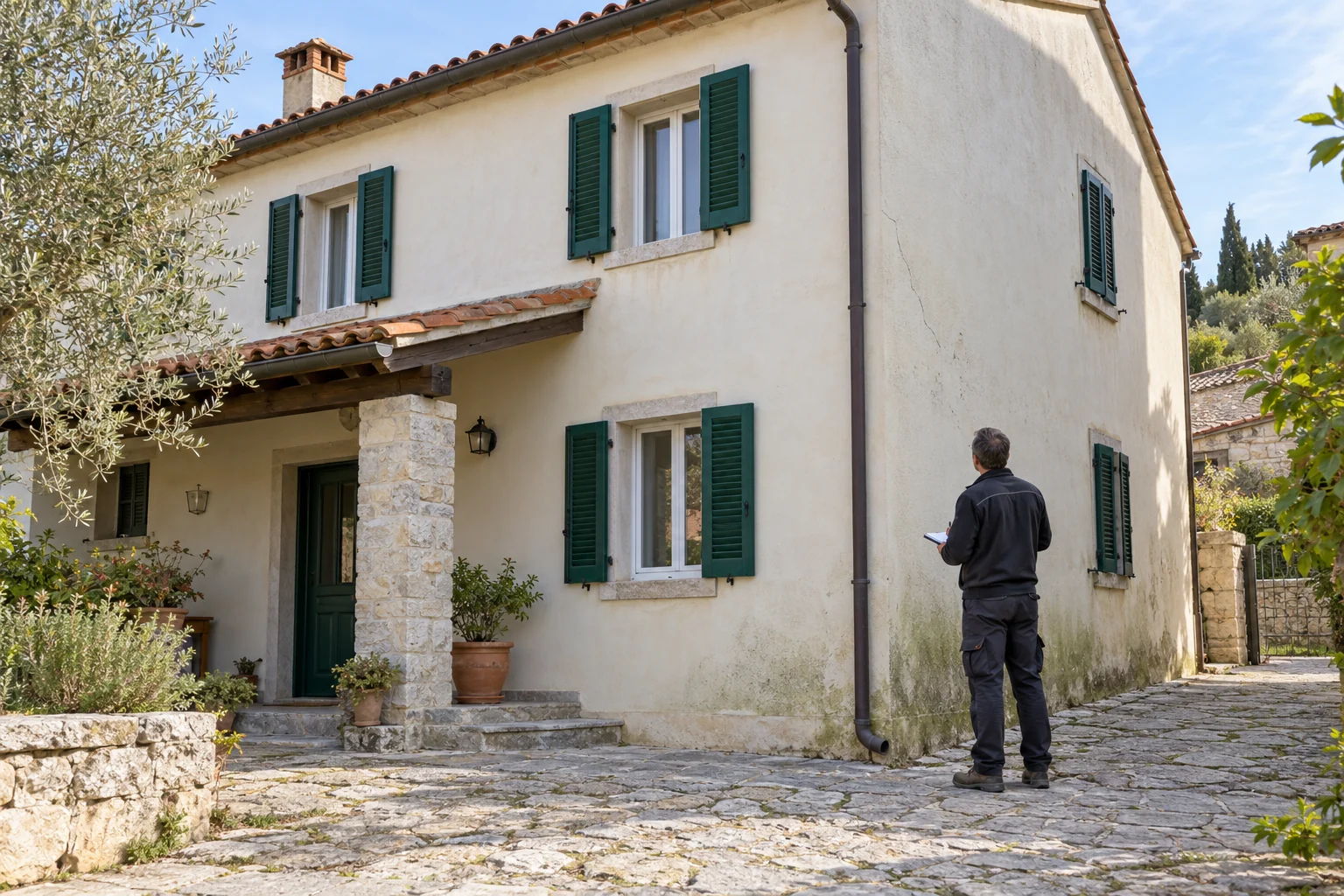
From the gate, it looks like a straightforward repaint. The cream has faded, there are dark streaks below the windows and the shaded side is turning green. A couple of coats should sort it out.
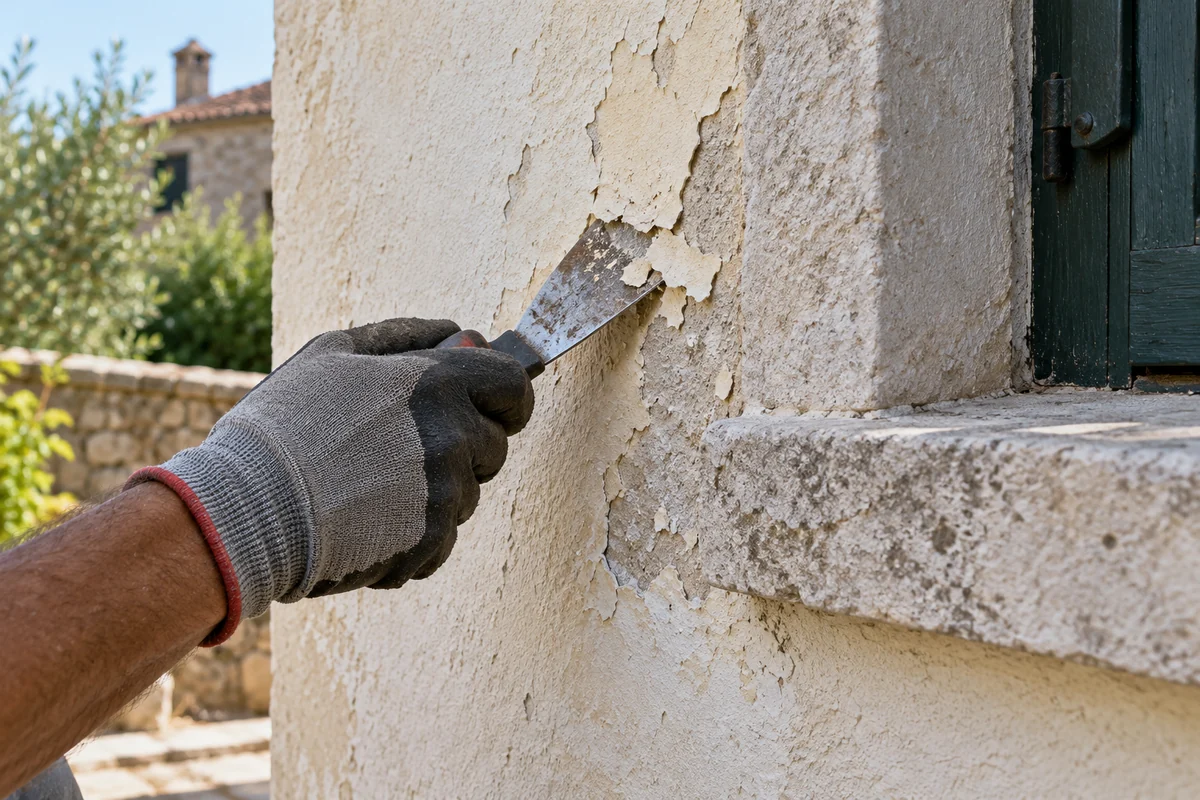
Then you rub the wall. Your hand comes away dusty. Paint lifts beside a sill, and there is a crack running from a window corner.
Before choosing the colour, establish what the new coating will stick to. If your existing layers are sound, dry and well attached, repainting may be enough. Loose render or continuing moisture needs attention first, otherwise you may pay to do the same work again.
That distinction belongs in your initial quotation. Otherwise, the lower price may cover decorating alone while the work your wall needs is left to be agreed later.
Start with the layers you already have
Include windows, balconies and the bottom of the wall in your inspection. The cleanest elevation cannot tell you the condition of the whole house. A powdery coating is one problem; pieces of render coming away with the coating are another.
Rubbing and scraping give useful clues. Tapping can identify areas that sound hollow. Have those areas investigated before agreeing how much to remove; sometimes that means opening a small section to see the layers underneath.
A suitable primer can help prepare a chalking surface after proper cleaning. It cannot fasten detached render back to the wall.
The data sheet for Baumit StarColor (11.03.2026) illustrates the requirement for a clean, dry, sound substrate. Follow the instructions for the coating actually selected.
A good wall deserves a straightforward repaint
There is no merit in stripping a sound facade just because the colour looks tired. Where the layers are secure and there is no unresolved damp or cracking, exterior house painting can be a sensible refurbishment.
The preparation still matters. Cleaning, removing weak paint, treating biological growth where needed and completing small repairs all come before the finishing coats. The surface also needs time to dry.
The primer and finish should suit your existing substrate. Ask why the proposed products fit your wall, beyond “we use this paint on every house”.
A crack is a symptom worth reading
Picture a neat repair beside a window. The gap is filled and the whole elevation painted. A few months later, the same line appears through the new finish because the original cause was never addressed.
Before agreeing a repair, have the crack’s position, pattern and history assessed. Does it cross different materials? Has it reopened after previous work? Is there a corresponding crack indoors?
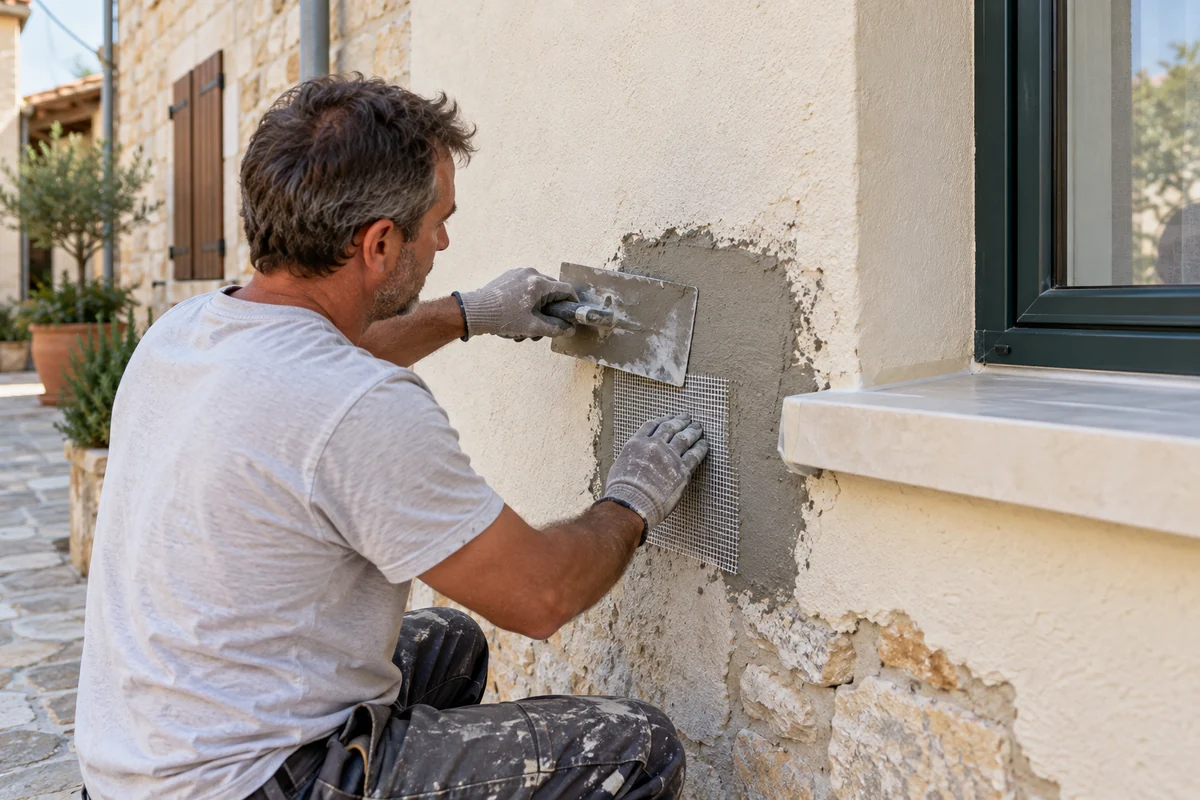
Some stable surface cracks can be treated with an appropriate repair coating system. Others need render or reinforced-layer repairs. Suspected structural movement calls for a civil engineer’s assessment before cosmetic work goes ahead.
A close-up photograph helps locate the damage. It does not, by itself, explain why your wall cracked.
Green staining does not condemn the render
Algae on a shaded elevation can look worse than the underlying damage. If the layers are sound, cleaning and a suitable treatment may be the right starting point, following the selected product’s instructions.
Look for the reason that patch stays wet: planting tight against the wall, a dripping detail, or a gutter spilling at one corner. Fix the gutter before paying for painting over the same damp area.
Pressure washing needs judgment. The aim is to clean the surface, not blast weak render off indiscriminately.
Follow the water at the base of the wall
Blisters, flaking and white deposits near ground level deserve investigation before repainting. Is paving directing rain towards your house? Is water entering at a balcony connection? Could moisture be rising from the ground?
Those are different investigations and different repairs. Have the water route traced before choosing the finish.
A vapour-permeable coating may belong in the specification. It will not mend a leaking pipe or stop a continuing supply of water into the wall. Address the cause, repair the affected details and let the prepared substrate dry before decorating.
Insulated facades need a system repair
An insulated facade includes boards, fixings, a reinforced base coat and the finish. A damaged surface needs to be understood in that context.
A small impact might need a local repair. Widespread detachment, recurring cracks or water behind the layers call for a closer inspection. Before approving another mesh layer over everything, ask which existing layers remain firmly attached.
The materials for facade repairs must suit the existing system. A change from pale cream to a very dark colour also needs checking: darker surfaces heat up more in sunshine, and insulated systems have requirements for colour selection.
A sound patch can still look like a patch
Paint can make the colour consistent without hiding a change in texture. An otherwise good repair may show up clearly when afternoon sun grazes the wall.
Agree the appearance before work starts. Do you want isolated repairs, or an entire elevation renewed for a more even finish? The quotation should describe your agreed result and the extent of work.
Ask what happens before the roller comes out
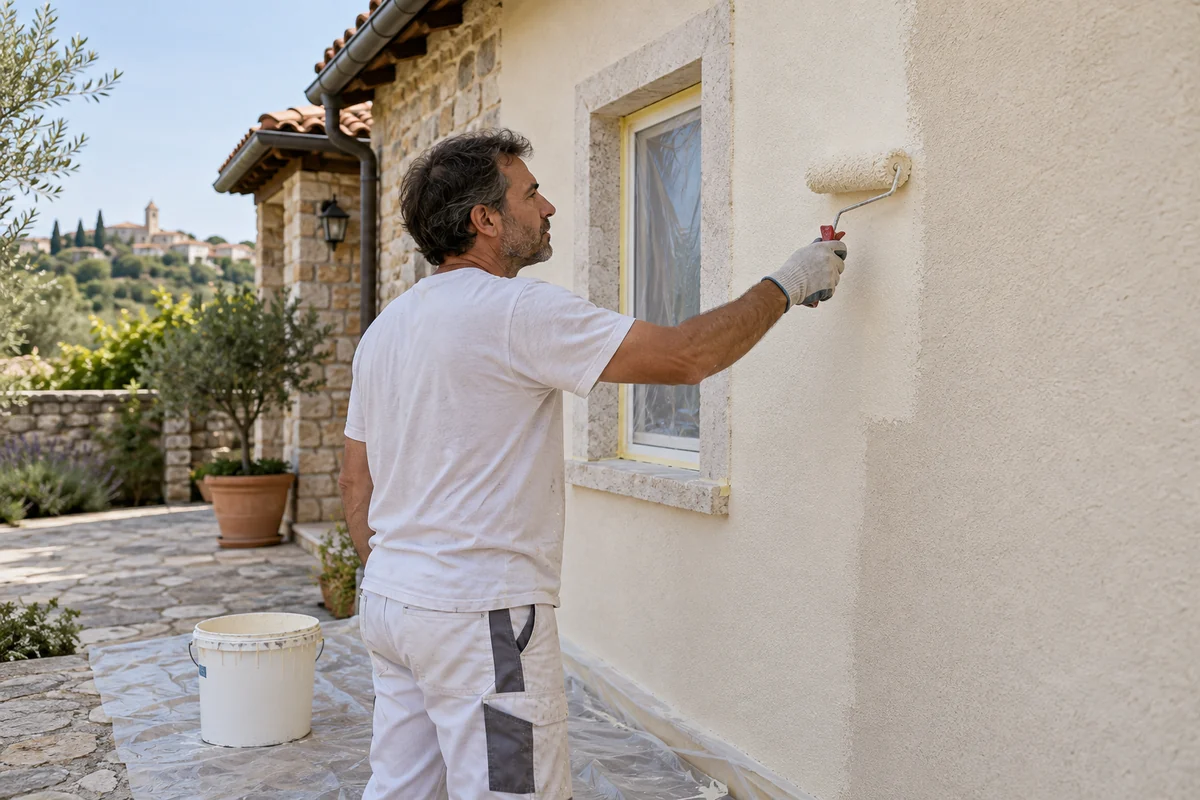
A line saying “paint external walls” leaves too much open on a damaged house. Ask for cleaning, removal, crack treatment, local repairs, primers and finishes to be described. Include access, protection of windows and paving, and clearing up.
Allow drying time in the programme. Having the scaffold ready does not make a wet wall ready for paint.
Send BUILD GRUPA an overall photograph of your house and close-ups of flaking, cracks, the wall base and window details. Tell us whether the marks change after rain and what has been repaired before. At the visit in Istria, we can agree what you can retain and what needs repairing. Choose the colour after that.