
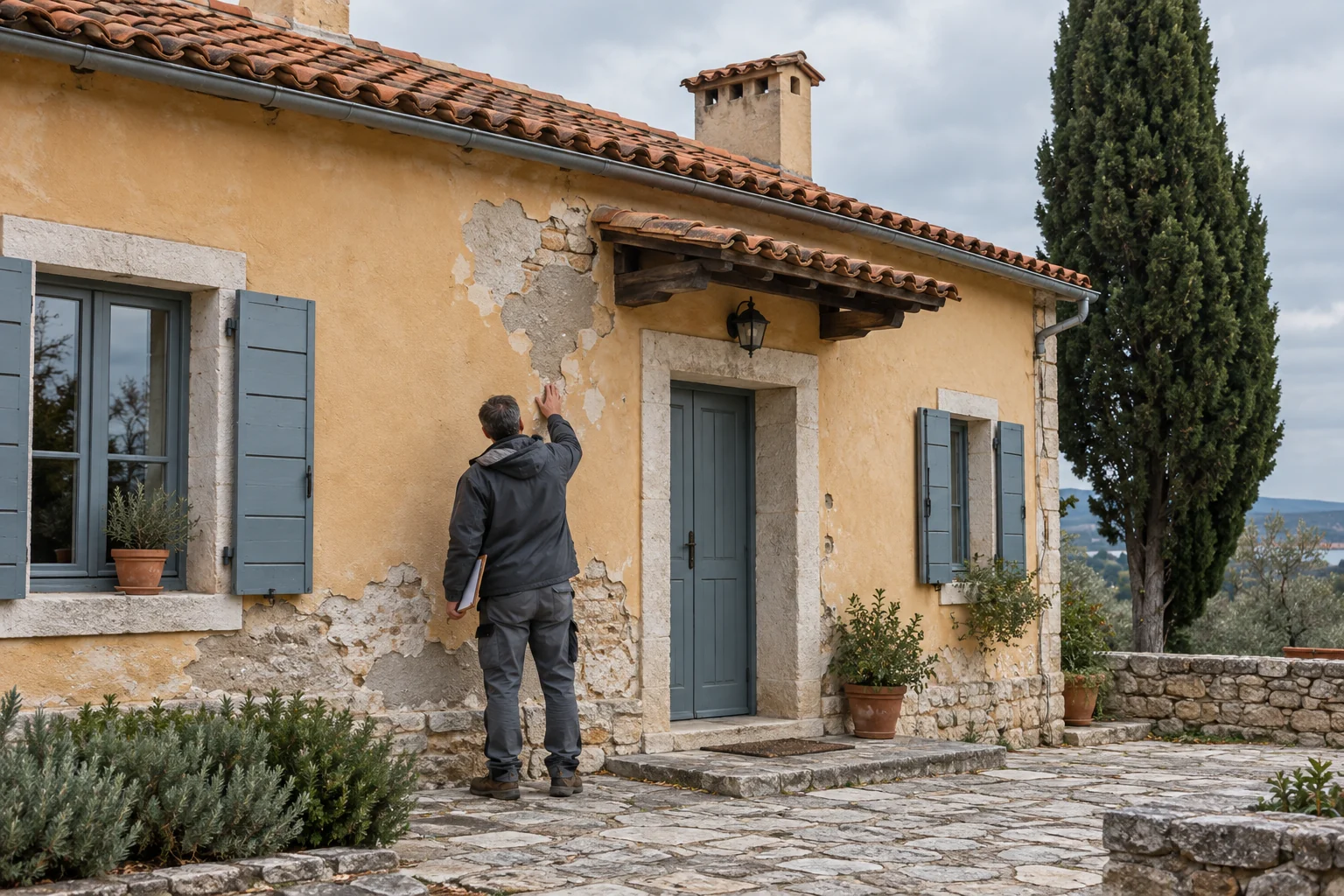
Picture two houses on the same street. One has faded paint and a small patch of damaged render beside the entrance. The other looks smarter, but inspection reveals loose layers and cracks across several elevations.
The first may need a sensible repair. A fresh finish on the second could conceal problems without resolving them.
For your house, the useful question is what can stay and what you want the work to achieve. Repairing the appearance and improving thermal performance are separate decisions. The facade’s age alone cannot tell you which scope is worth paying for.
Age is a clue, not a verdict
You can retain well-attached render where it remains suitable. Equally, a relatively recent finish does not deserve to stay if the underlying work is defective.
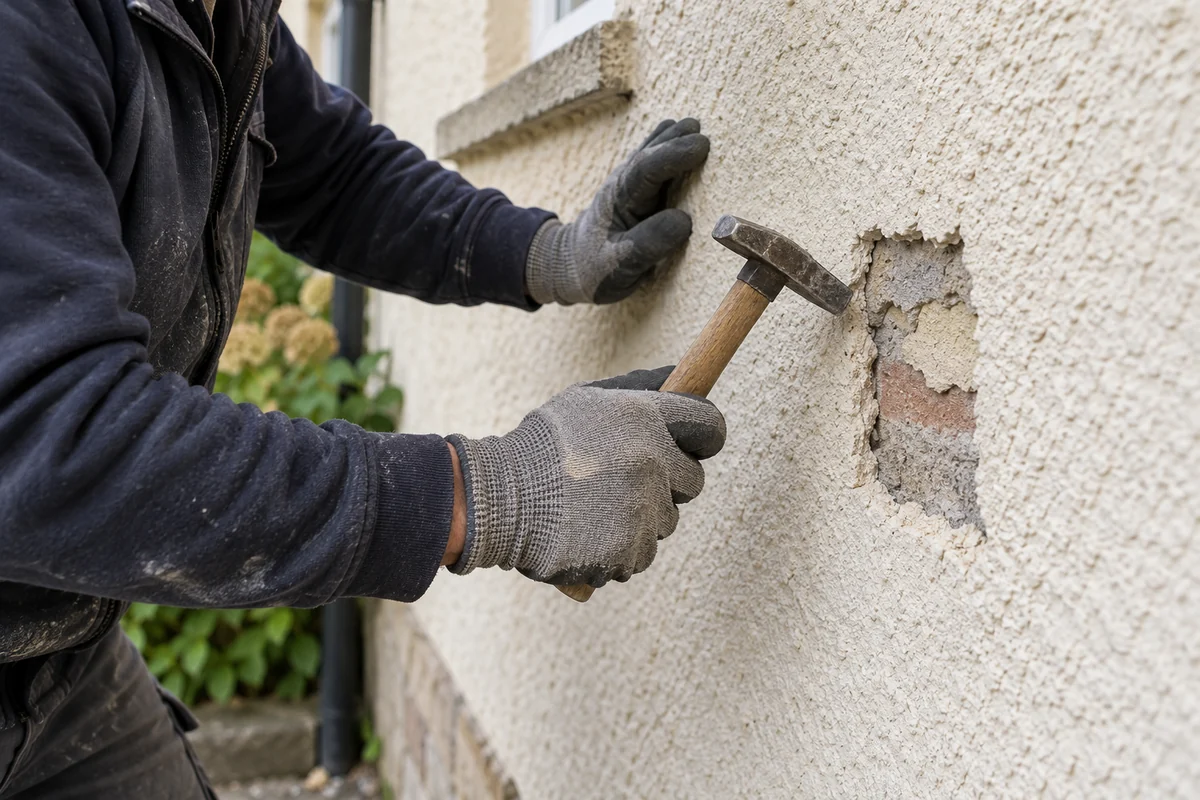
Your inspection should cover the coating, render, moisture marks and connections around windows, balconies and the wall base. On an insulated facade, ask about the boards, reinforced base coat and fixings.
Rubbing, scraping and tapping provide initial clues. Where those are inconclusive, local openings or suitable tests may be needed. A glance from the driveway cannot establish every layer’s condition.
A local problem can deserve a local repair
Imagine water getting into a joint beside a window sill and damaging a limited patch. If the surrounding facade is firmly attached, removing an entire elevation may be unnecessary. Have the water entry resolved and damaged material removed, then agree a compatible repair.
The same reasoning applies to an isolated impact or a worn coating on an otherwise sound wall.
A local technical repair may still need a finish across the whole elevation for a more consistent appearance. Paint can equalise colour without concealing a different render texture. Agree the expected appearance before settling the scope.
There is an option between patching and starting again
Sometimes the sound parts can remain while larger areas of the finish or reinforced layer need renewal. The proposed facade work should follow the inspection findings and the existing system.
Applying fresh mesh over everything is not an answer to weak adhesion underneath. First establish which layers are suitable to retain and how the repair will connect to them.
Repeated failure changes the conversation
Loose areas across several walls, recurring cracks or water behind the layers call for a wider investigation. Is the problem in the finish, the base coat, the insulation or its attachment?
The answer determines whether to renew part of the build-up or remove and replace more of it. There is no universal age at which every facade becomes due for replacement.
A crack suggesting movement in the building needs a structural assessment before finishing work. New insulation is not a structural repair.
Sound render can still cover an uninsulated wall
A wall can have excellent render and poor thermal protection. Repairing and painting it improves the surface; it does not add the insulation that is missing.
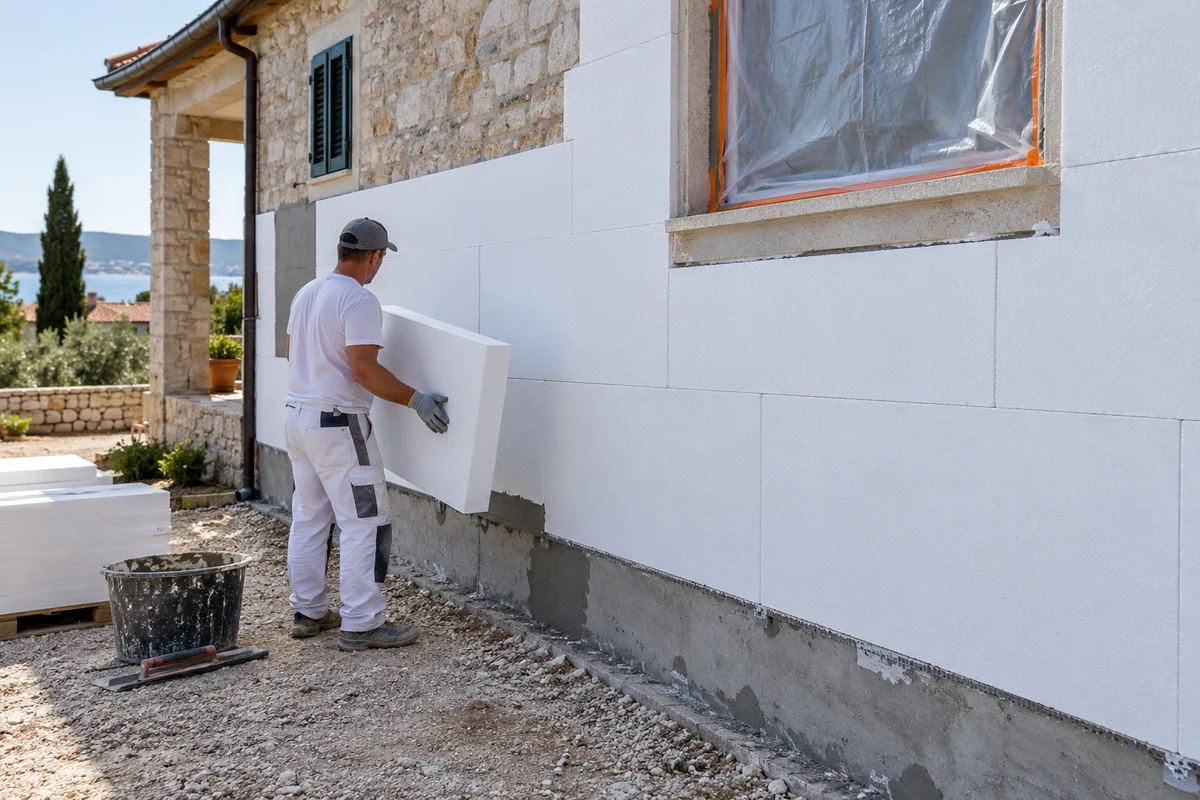
During a long-term house refurbishment, an external thermal insulation composite system, or ETICS, is worth considering. Insulation, attachment, reinforcement and finish form a coordinated build-up.
Have your walls and the rest of the envelope assessed rather than copying the insulation thickness next door. Cold corners or mould also require checking moisture, ventilation and thermal bridges. Their presence alone does not identify the facade as the only cause.
Existing insulation does not always have to come off
Installing a new ETICS over an existing ETICS is an option in suitable circumstances. It requires assessment of the old build-up and supporting wall, selection of an appropriate system and an attachment design.
The professional guidance HUPFAS: ETICS na ETICS (2022) covers assessment of the existing system. It does not replace the project design or the selected manufacturer’s instructions.
Keeping old boards simply to avoid disposal is not sufficient justification. The retained layers must meet the requirements of the proposed solution.
Extra thickness affects the details
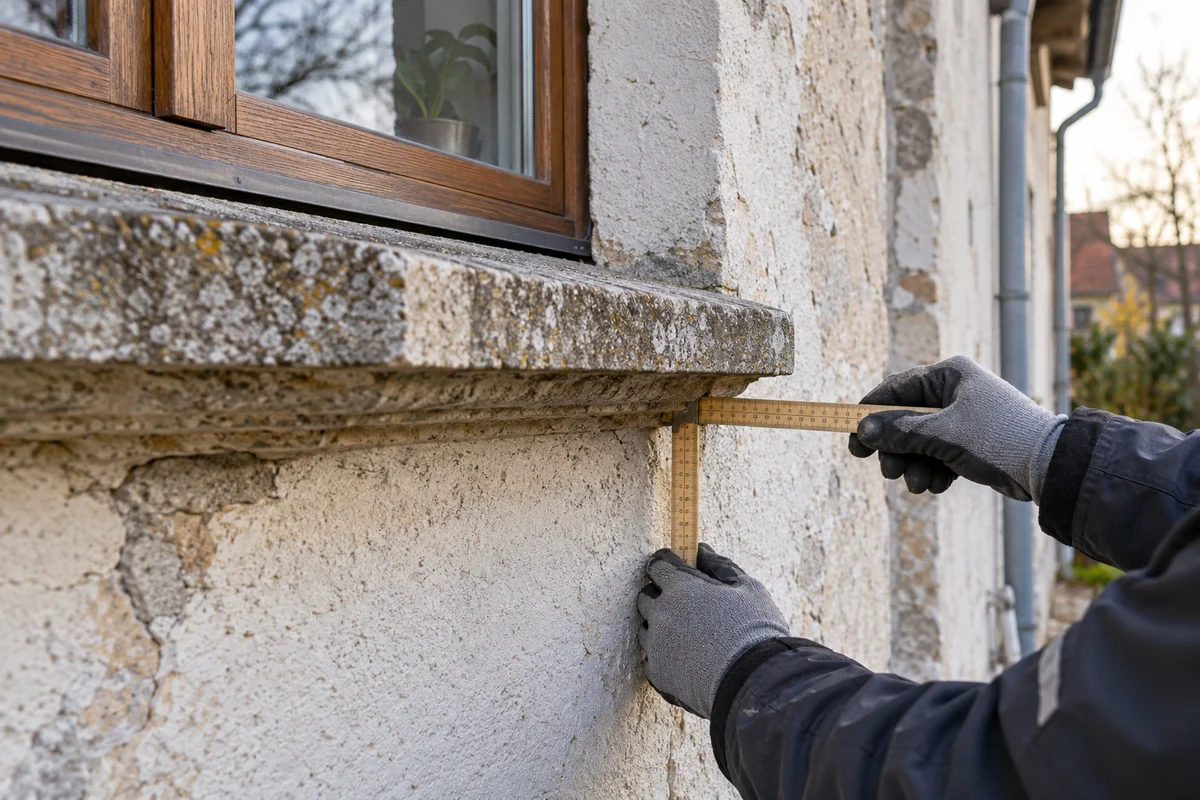
Adding insulation moves the external wall face outwards. Window sills, reveals, roof connections, gutters and the wall base need checking. So do brackets for air-conditioning units, lights and other fixtures.
Picture discovering that a stone sill has insufficient projection after the new insulation is already installed. Have that detail resolved before ordering materials.
On an Istrian house with balconies, stone surrounds and older extensions, arrange an inspection of every elevation before completing the specification.
Compare the outcome as well as the total
A repair quotation and a new insulated facade quotation do not buy the same result. Check what stays, what comes off, substrate preparation, opening details, access, protection and waste removal.
Take particular care when new materials are described at length but preparation gets only a vague line. The whole proposal relies on that preparation.
Send BUILD GRUPA photographs of every side of the house and close-ups of loose render, cracks and damp. Tell us whether insulation already exists, what has been repaired and whether the goal is appearance, thermal improvement or both. At the visit, we can establish what you can retain and what needs attention before arranging the scaffold.