
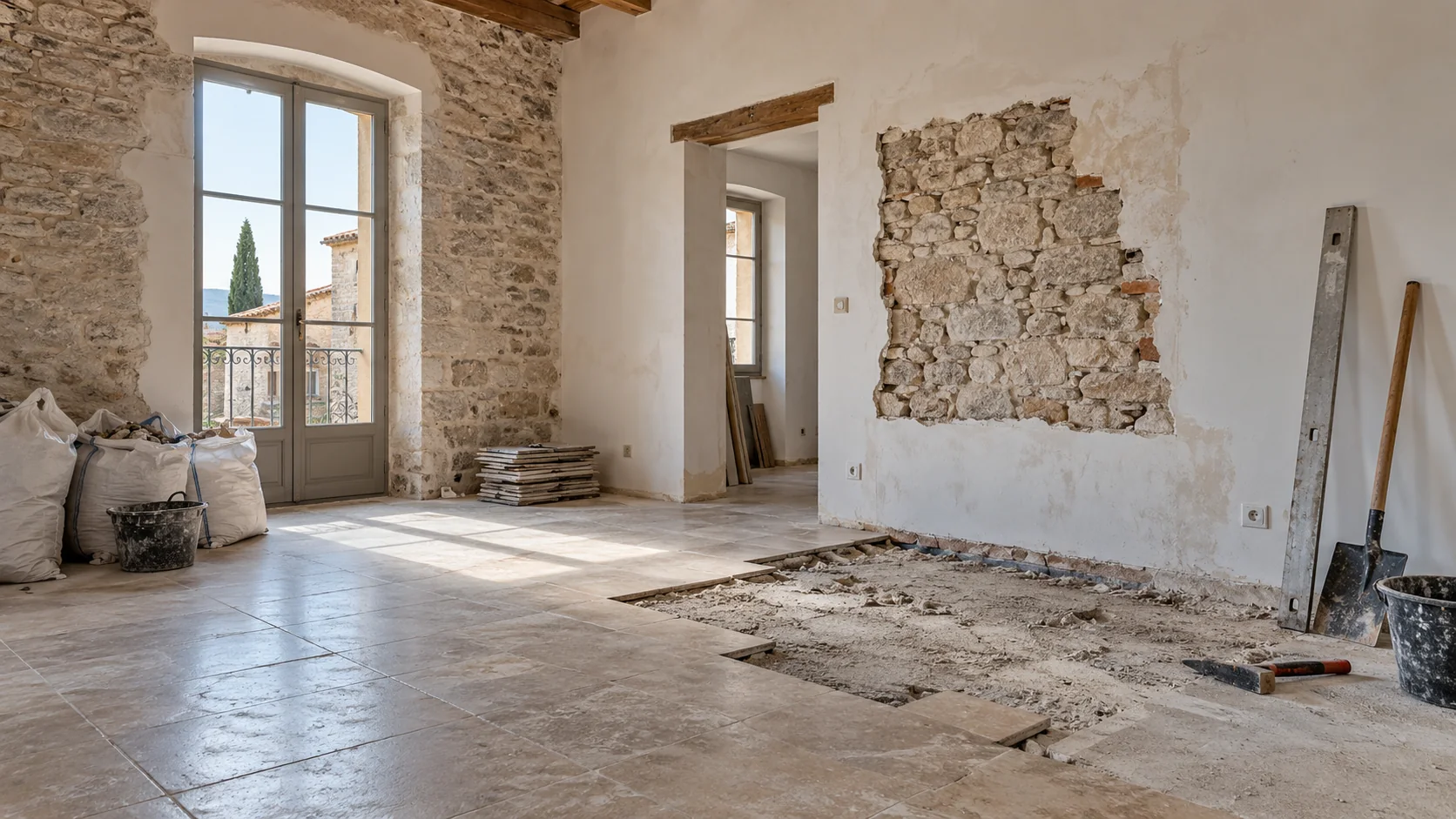
You lift the old flooring, ready to fit the replacement. The screed underneath starts to crumble. The new floor is already ordered, but laying it is no longer the next job. First, someone has to sort out what is underneath.
Or the floor is sound and your plans change instead: a basin moves, a few sockets are added, the kitchen layout shifts. Either can raise your bill. Before agreeing an extra charge, ask what has changed since the original agreement and what was already included.
A ballpark figure is not a finished quote
A figure based on photographs and floor area can help you decide whether to explore a project. It cannot establish everything behind the walls or beneath the floor.
Before relying on a quote, check the scope. “Bathroom renovation” could mean anything from replacing fittings to stripping the room and renewing services. The useful version lists demolition, waste removal, plumbing and electrical work, preparation, waterproofing, tiling and installation of the agreed fittings.
Also check exclusions and the treatment of VAT. A turnkey description still needs a written specification. If you are comparing contractors, give each one the same brief.
What the old tiles were hiding
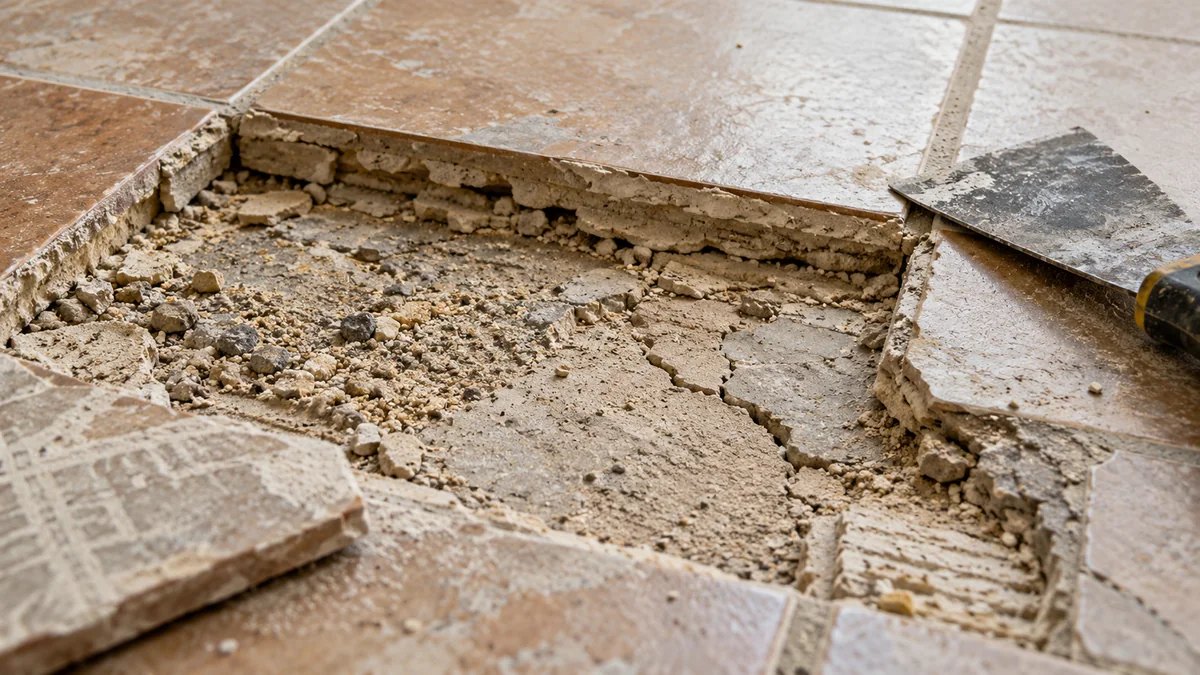
Removing an old finish may expose a crumbling substrate, uneven levels or pipework that requires a broader repair.
Ask for photographs of the finding and a proposed solution. Then check whether making that surface suitable was already included. Work being technically necessary does not, by itself, settle who pays for it.
The work between the headline items
A useful quote covers the work around the main task. Who protects the rooms you are keeping? Who carries rubble downstairs? Who makes good the wall after an electrician has finished?
Check access, deliveries, disposal, surface repairs, fittings and final cleaning. If another contractor or the owner is providing an item, include it in the overall budget anyway. An item outside one contractor's quote is still a project cost.
The cheapest quote is not automatically the best value
A quote that leaves out rubble removal, making good and floor preparation can look better on paper. Those jobs still need doing. Compare the scope before comparing the totals. A higher figure does not prove better workmanship either; the useful comparison starts with the same work and a clear specification.
“While you’re here, could we also…”
Moving a basin may affect water supply, drainage, wall finishes and the tile layout. Adding a socket after decoration may require opening and making good a finished surface.
Different finishes can also change installation requirements. Confirm that your chosen product works with the priced method before ordering it. Agree layouts and fittings before services are concealed wherever possible.
When a change replaces an original item, review the original allowance too. Do not simply add the new work without checking whether the replaced work should be deducted.

A holiday let has a deadline
The physical work is only part of the planning. Establish where deliveries can stop, how materials reach the apartment and whether the building or location restricts working hours or dates.
If the property must be ready for guests, allow for decisions and deliveries as well as construction. A booking date does not make missing fittings arrive sooner.
For owners living abroad, agree one point of contact, photographs at important stages and written approval of changes. Keep a running forecast of the final total, rather than a folder of unrelated extra invoices.
Keep a reserve for the unknowns
Base contingency on unresolved risks, rather than treating one percentage as right for every property. A home with inspected surfaces and a settled specification has different uncertainties from one with concealed services and little documentation.
List what is still unknown and what can be checked before starting. Keep necessary repairs separate from optional upgrades. Your contingency is a planning reserve, not an amount that must be spent.
Agree the extra work before it starts
Ask for the finding, the proposed work, quantities, price and effect on the programme. Check it against the original scope and ask whether there is another suitable solution.
Written approval is a practical way to manage costs.
Keep what still works
You do not have to replace everything simply because you are renovating. Sound existing elements may be retained if they suit the proposed work and the selected system.
Review decorative upgrades and higher-priced fittings before removing necessary preparation or repairs. Separate what needs fixing, what you would like to improve and what can wait.
A few questions before you start
Does every renovation go over budget?
No. A clear scope and timely decisions reduce the risk. Some concealed conditions can remain unknown until work opens up the relevant area.
Can I get a final quote from photographs?
Photographs are useful for an initial discussion. Whether a visit, measurements or further investigation is needed depends on the proposed work.
Is a price per square metre enough?
Not on its own. Check which area it applies to, the included work and the basis of measurement.
What if an extra charge is unclear?
Request the description, reason, quantities and calculation, together with the relevant part of the original quote.
How can I manage the project from abroad?
Agree reporting and approval arrangements before work starts, and track the expected final cost after each agreed change.
Let’s look at your property
Send us the location, approximate area, photographs and a short description of what you want to change. Include anything you want to keep and any deadline linked to moving in or letting the property. We can then discuss the next step for your home.