
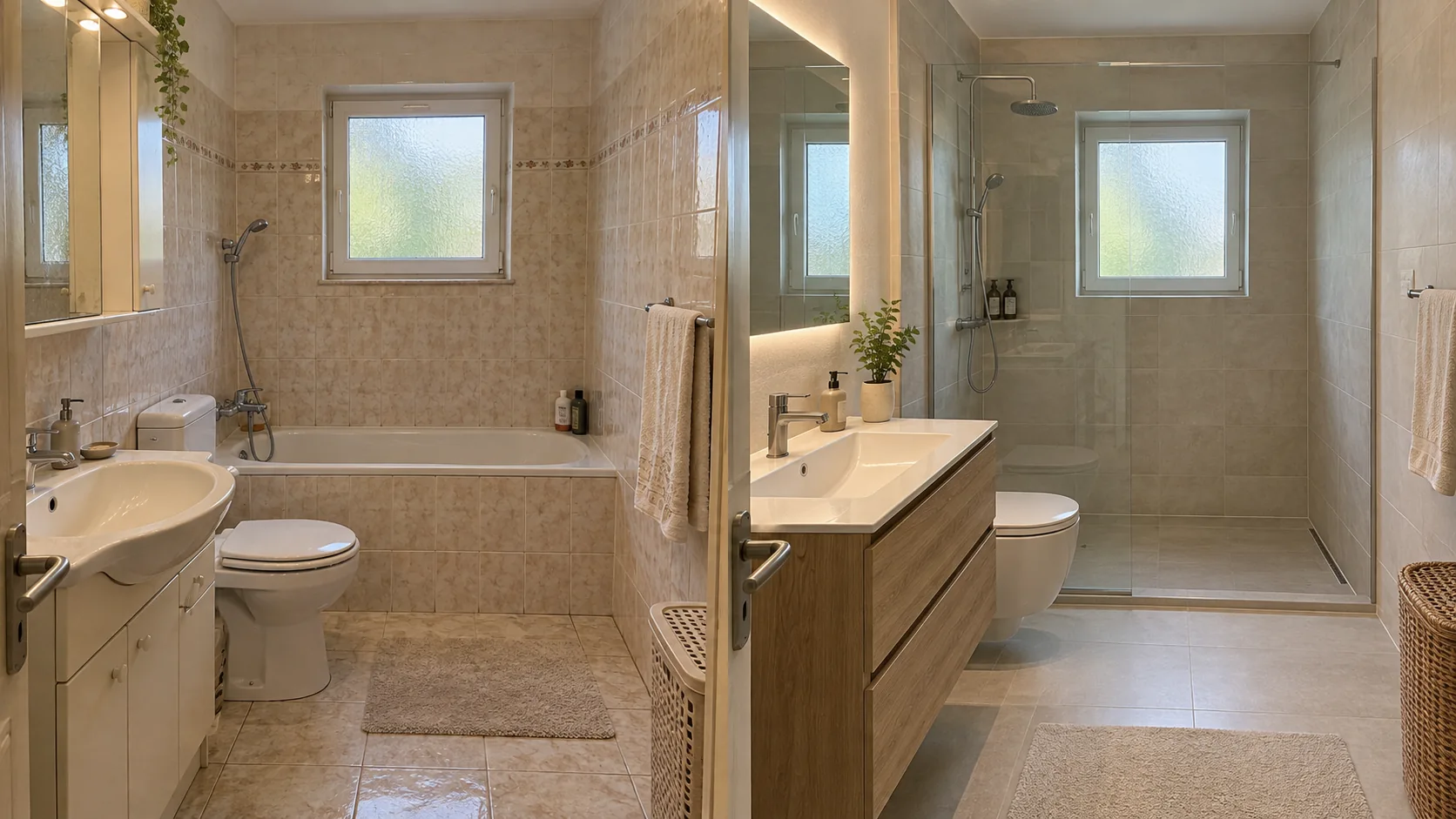
You do not need to strip a bathroom simply because it looks dated. A selective refresh can be sensible when the plumbing, waterproofing and underlying surfaces are suitable to keep. A full renovation becomes more relevant when there are leaks, damaged substrates or substantial layout changes. The right scope starts with an inspection.
If you own a holiday home or apartment in Istria and live in the UK or elsewhere abroad, the decision has another practical consequence: how much can you agree during one visit, and what might need your approval after you leave?
Perhaps the bathroom works perfectly, but the vanity, mirror and shower screen have had their day. Or perhaps the room looks acceptable while water has already begun reaching the wall on the other side. Those are very different projects.
When a selective bathroom refresh makes sense
If the layout works and the existing systems are sound, replacing a basin, cabinet, mirror, light fitting or WC may not require wholesale removal of the tiles. The new equipment must still fit the available space and connect correctly to the existing services.
Keep the distinction between equipment replacement and opening up wet surfaces. Replacing a cabinet is one thing; removing tiles inside a shower is another. Once a wall or floor is opened, the contractor needs to assess how the new work can connect to the old layers.
A smaller area is not automatically an easier job. A reliable junction between existing and new waterproofing can be more demanding than renewing one continuous surface.
When a full renovation deserves serious consideration
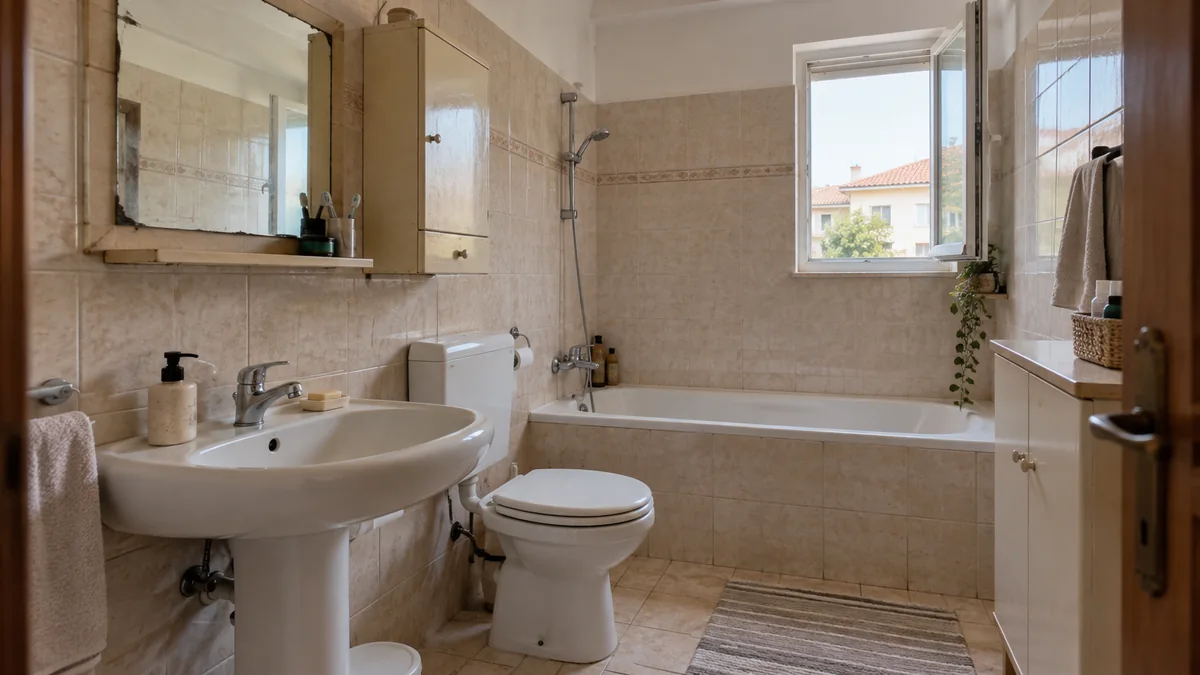
Persistent water ingress, deteriorated plumbing, loose tiles or damaged substrates point beyond a cosmetic update. So does a plan to move the shower, basin and toilet to substantially different positions.
Replacing a bath with a level-access shower illustrates the difference. The work may involve changing the waste connection, checking the available floor depth, forming falls, installing a waterproofing system and then tiling.
The final scope may only become clear once the old finishes are removed. A quotation should explain how concealed defects will be recorded and how any extra work will be agreed.
Check the pipes while they are accessible
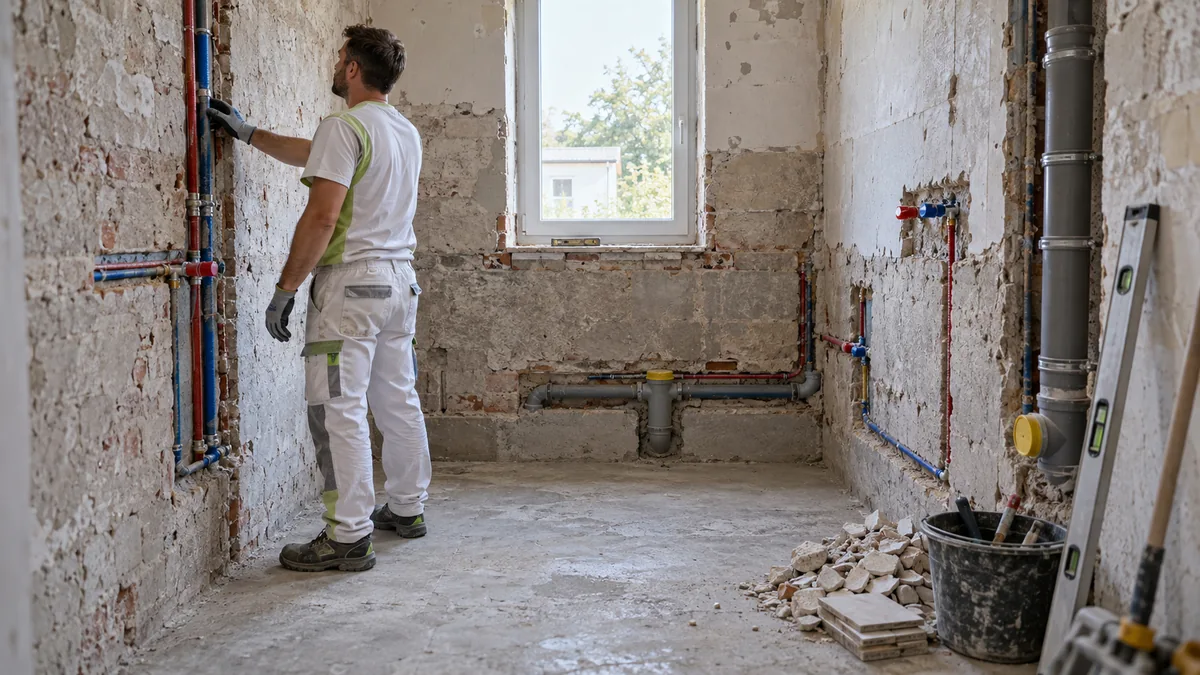
Age alone is not a sufficient reason to replace every pipe. Relevant questions include the pipe material, evidence of previous leaks, condition of accessible connections and whether the proposed fittings require the services to move.
If a full refurbishment already exposes the installation, assess its condition before closing the walls again. Otherwise, a fault in retained pipework could mean disturbing newly finished surfaces.
Ask what will be retained, what will be renewed and why. A clear explanation is more useful than a blanket promise that everything must be new.
New tiles cannot solve an unresolved waterproofing problem
Tiles and grout do not replace a properly installed waterproofing system. If water is getting behind the existing finish, laying attractive new tiles does not establish where it is entering or repair the underlying cause.
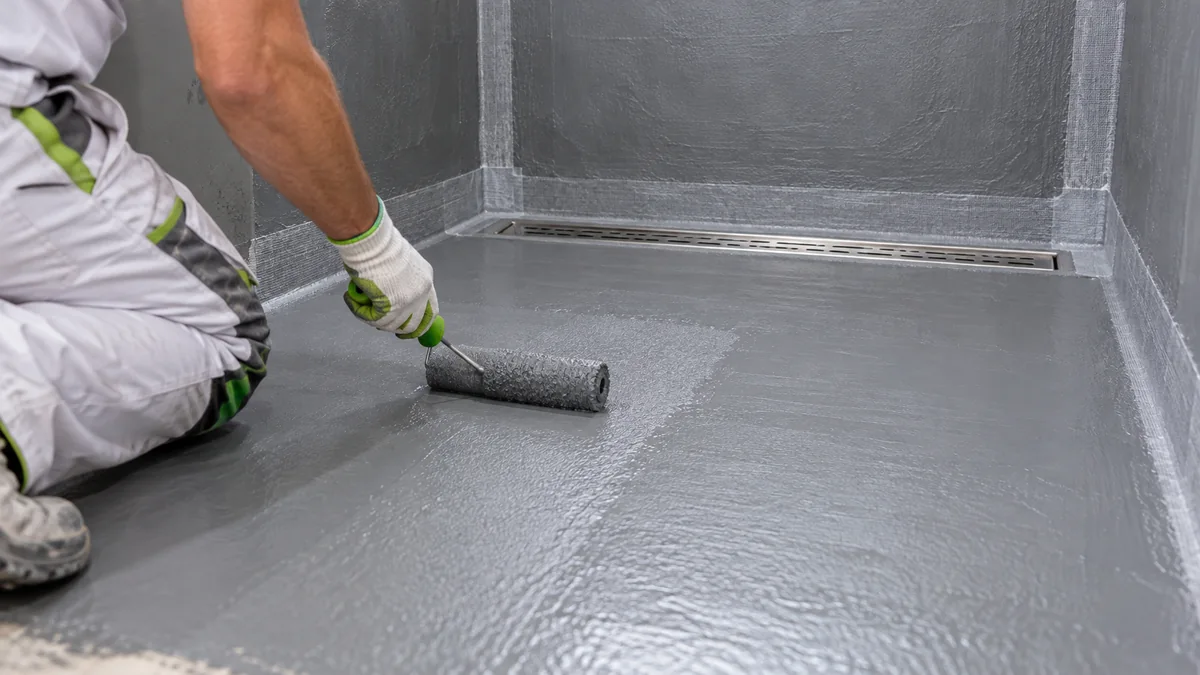
Sikalastic-152 (04/2021, 02.02) is an example of waterproofing installed before ceramic tiles. It is not a specification for every bathroom or terrace.
In a shower, the floor-to-wall junctions, corners, drain and service penetrations need to form a coherent waterproofing arrangement. A local repair must be compatible with the retained construction.
Some systems allow new layers over suitable existing tiles. That does not make loose tiles, unstable substrates or an unexplained damp patch an acceptable starting point. The chosen system and the existing surface both need to be assessed.
Agree the shower solution before ordering the glass
A flush shower floor needs space for the drain, the floor build-up and suitable falls. The position and level of the existing waste connection can determine whether your preferred arrangement is practical.
In an apartment, the floor structure and shared services also matter. Cutting into structural elements to create drain depth is not a shortcut; any proposed structural intervention requires professional assessment.
If the preferred design cannot be achieved sensibly, a different shower arrangement may be a better choice. Decide this before buying equipment or starting demolition.
A small room still needs a measured layout
Check actual product dimensions, door swings and usable space. A deeper vanity can crowd the shower entrance, and a concealed cistern enclosure can take more room than a catalogue photograph suggests.
If the layout is changing, prepare a simple measured plan and identify the exact equipment. The installer needs connection positions and dimensions, not just a mood board.
Partial tile replacement also has a visual limitation: even a close match may differ in shade, size, texture or grout lines. Agree what the finished repair is expected to look like.
Compare the whole project, including repeat work
A refresh can become costly if you fit new equipment now, then return soon afterwards to replace tiles, pipes and waterproofing. Protection, dismantling and installation may have to happen twice.
That does not justify stripping a sound bathroom simply to fit a new basin. Compare the two scopes against the condition of the room and how long you intend to keep the retained elements.
If this is the property's only bathroom, confirm when it will be unavailable. Tiling is not the last milestone: final connections, completion checks and the materials' required curing or drying periods still matter.
Managing the decisions from abroad
Before returning home, agree access, the equipment schedule, procurement responsibilities and who can approve a change. For a rental property, consider the planned bookings when discussing the programme rather than assuming an off-season job will fit automatically.
If removal reveals damaged plaster, damp substrates or unsuitable pipework, ask for photographs, a written explanation and the effect on cost and timing before agreeing additional work. Necessary immediate safety measures are a separate matter.
A practical starting point for the decision
This comparison is a guide to the first conversation. The final scope depends on the property, the chosen equipment and what an inspection establishes.
| Existing condition or planned change | What to consider |
|---|---|
| Sound surfaces and services; dated equipment | Selective refresh |
| Replacing fittings without moving them | Targeted installation work |
| A few damaged tiles on a stable substrate | Local repair following inspection |
| Water reaching the substrate or adjoining room | Identify the cause before deciding the scope |
| Moving the shower, WC and basin | Broader or full renovation |
| Plumbing, substrates and waterproofing need renewal | A full renovation may be more rational |
| Hidden layers have not been assessed | Inspection and, where needed, a controlled opening |
What a useful quotation should include
The quotation should identify the required demolition, protection, waste removal, plumbing, substrate preparation, waterproofing, tiling and final installation. It should also state who buys the tiles and sanitaryware and whether adhesives, grout, sealing tapes and other system components are included.
A tiling quotation and a complete bathroom renovation quotation are not equivalent offers. Compare the work included before comparing the totals.
Send photographs, approximate dimensions, the location in Istria and a short explanation of what you want to change. BUILD GRUPA can discuss the likely scope and whether a site visit is needed before preparing the quotation.
Frequently asked questions
Is a partial bathroom renovation always cheaper?
No. It can involve less work when retained components are sound, but repeat dismantling and installation may increase the total if further renovation is needed soon afterwards.
Must all pipes be replaced?
Not automatically. Their condition, material, connections and the planned layout determine whether renewal is justified.
Can new tiles go over existing tiles?
Some systems permit this on suitable stable surfaces. Adhesion, waterproofing, available heights and system compatibility must be checked.
Does a new basin mean new waterproofing?
Not necessarily, provided the replacement does not open waterproofed surfaces and there is no indication of an underlying problem.
Can a bath become a shower without a full renovation?
Sometimes. It depends on the waste connection, floor depth, substrate condition and the possibility of forming reliable waterproofing.
How long will the bathroom be out of use?
The scope, materials, equipment and required drying or curing periods determine the programme. Agree a realistic timeframe after inspection.
Can I make decisions while living abroad?
Agree a named contact, site access, photographic reporting and written approval of changes before work starts. Discuss any need for an in-person visit in advance.
Željko Maronić, ing.građ.
BUILD GRUPA d.o.o.